Showing posts with label Paris. Show all posts

Sunday, March 29, 2020

"Real heroes don't wear cape", a powerful image by Uğur Gallenkuş


Real heroes don't wear cape.

     The history of medicine shows how societies have changed in their approach to illness and disease from ancient times to the present. Early medical traditions include those of Babylon, China, Egypt and India. Sushruta, from India, introduced the concepts of medical diagnosis and prognosis. The Hippocratic Oath was written in ancient Greece in the 5th century BCE, and is a direct inspiration for oaths of office that physicians swear upon entry into the profession today. In the Middle Ages, surgical practices inherited from the ancient masters were improved and then systematized in Rogerius's The Practice of Surgery. Universities began systematic training of physicians around 1220 CE in Italy.


    Invention of the microscope was a consequence of improved understanding, during the Renaissance. Prior to the 19th century, humorism (also known as humoralism) was thought to explain the cause of disease but it was gradually replaced by the germ theory of disease, leading to effective treatments and even cures for many infectious diseases. Military doctors advanced the methods of trauma treatment and surgery. Public health measures were developed especially in the 19th century as the rapid growth of cities required systematic sanitary measures. The mid-20th century was characterized by new biological treatments, such as antibiotics. These advancements, along with developments in chemistry, genetics, and radiography led to modern medicine.


     Louis Pasteur is one of those heroes. Pasteur is French biologist, microbiologist and chemist renowned for his discoveries of the principles of vaccination, microbial fermentation and pasteurization. The person who laid the foundations of modern microbiology. He is remembered for his remarkable breakthroughs in the causes and prevention of diseases, and his discoveries have saved many lives ever since. He reduced mortality from puerperal fever, and created the first vaccines for rabies and anthrax. via Wikipedia


      Mustafa Kemal Atatürk once said, "if one day my words are against science, choose science.". I loving this strong statement. 


Source: Visit Uğur Gallenkuş on Instagram

Tuesday, October 9, 2012

L'histoire du Palais Garnier à Paris


A statue of Apollo holding a lyre at the Palais Garnier in Paris

The Palais Garnier in Paris is most commonly known as the Paris Opera, and is considered one of the most important structures in Paris. A 2,200 seat opera house, it became the successor to the Théâtre de l'Académie Royale de Musique, which burned down in 1873. This landmark is a prime example of Beaux-Arts architecture movement, drawing on the17th century Classical Roman Baroque style of emphasizing drama and grandeur, as well as symmetry.
The Palais Garnier was commissioned during the reconstruction brought on by Napoleon III – civic planner Baron Haussman was given the task to clear enough land to build the opera house in 1858, and architect Charles Garnier's design was chosen from a competition held in 1861.

Palais Garnier model

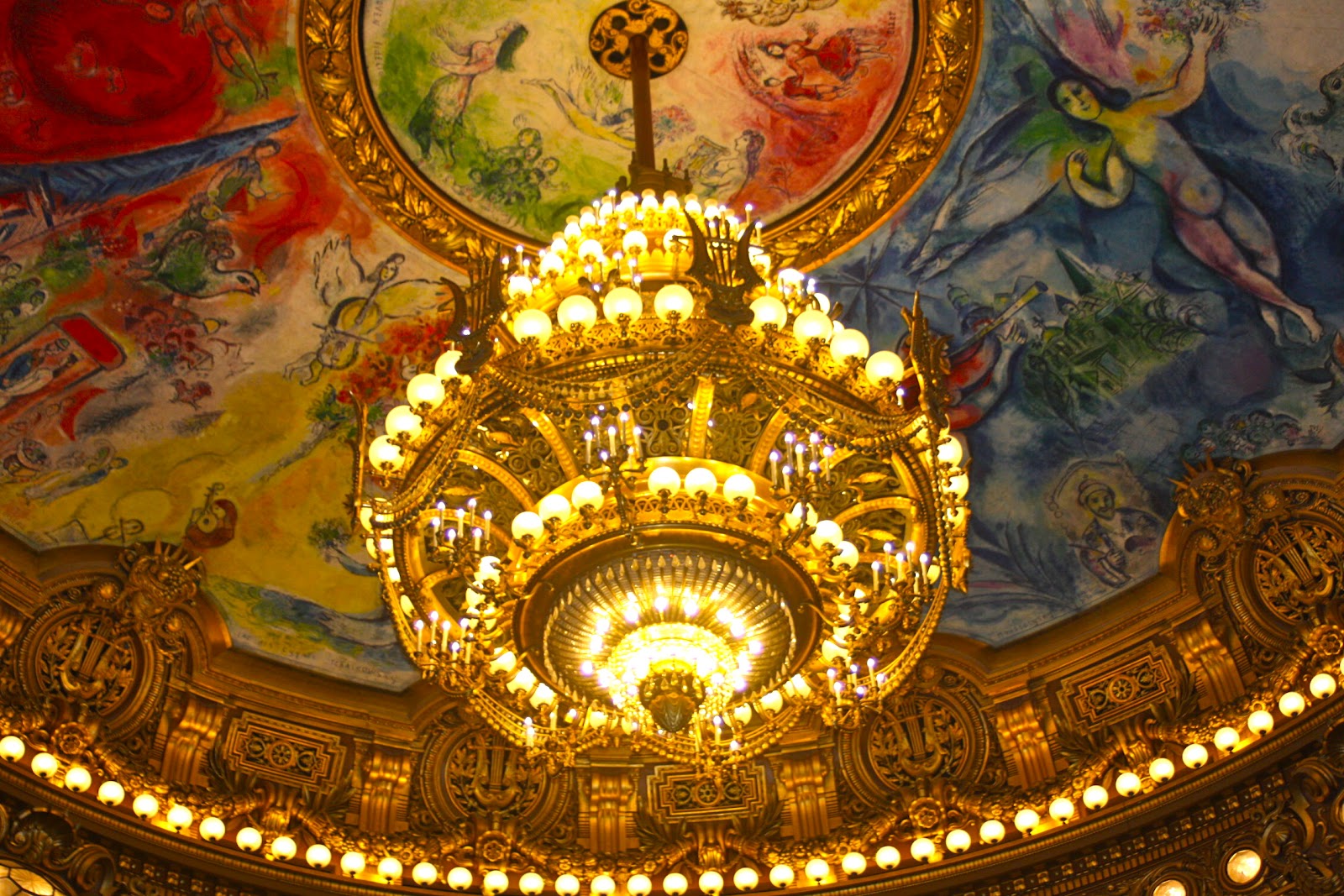
The building was designed to be an extravagant experience – a lush, richly decorated space with over the top elements such as a six-ton central chandelier, bronze busts of composers, and multiple columns, friezes and statues. The enormous stage could accommodate up to 450 people at one time, an attention to space only matched by the building’s cavernous corridors and stairwells.
Construction began in 1862, and very soon was plagued with setbacks and delays. It turned out the foundation was unwittingly laid upon a swamp, which took roughly eight months to drain. Then the Franco-Prussian War and the subsequent fall of Napoleon III also caused long interruptions between construction periods.


Front view

It wasn’t until the Théâtre de l'Académie Royale de Musique (1821 – 1873) burned down that there was a groundswell of motivation that finally gave Garnier a chance to finish, and he did so by the end of 1874. The Palais Garnier was inaugurated on January 15, 1875. However, the name Palais Garnier is only a recent title – by the time it was renamed as such in 1989 it had gone through two other names. Its first was Académie Nationale de Musique - Théâtre de l'Opéra and was so until 1978 when it was renamed as the Théâtre National de l'Opéra de Paris. 
Palais Garnier became the official name when the Opéra Bastille was built in 1989 to replace the older opera house – luckily, the Palais Garnier stillremains and continues to house performances. The survival of the Palais Garnier is thanks to the public that still considers it to be and refers to it as the Paris Opera.

The Grand Staircase

The Grand Foyer at The Palais Garnier

A view of the stage

The ceiling of the auditorium, decorated by Marc Chagall

 The stage overlooking the seats, the boxes, and the famous chandelier
Source: